
Covering The Biggest World Cup Ever - Without Leaving The UK
The 2026 FIFA World Cup was the largest in the tournament's history: 48 teams, 104 matches, 16 host cities spread across three nations, and a global audience in the billions. For a national broadcaster, the instinct is to send everyone. The reality of a continent-sized tournament - with kick-offs landing in the small hours of UK time and venues thousands of kilometres apart - made that instinct expensive, exhausting, and hard to justify on sustainability grounds.
BBC Sport made a different call. Rather than build temporary studios across North America, the broadcaster anchored its presentation at MediaCity Studios (formerly dock10) in Salford and used Pixotope to put its presenters and pundits inside the tournament - from more than 4,000 kilometres away.
The Challenge
The challenge wasn't simply to save money and carbon, though the BBC projected a meaningful reduction in its production footprint compared with covering Qatar 2022. The real challenge was authenticity. As BBC Sport Design Director John Murphy framed it, the team was starting from “a blank canvas,” and the question was how to create a space that still felt genuinely connected to a World Cup happening on the other side of the world.
MoVING beyond green screen
The BBC's virtual production credentials were already established. At Euro 2024, the team blended XR graphics with real live scenery from Berlin, including views of the Brandenburg Gate - enhancing a real location with virtual elements.
For 2026, the brief was inverted. There was no real balcony overlooking a host city to enhance. Everything had to be built virtually. And the team made a deliberate decision to retire from the green screen entirely in favor of a full LED virtual production environment running on an end-to-end HDR pipeline with Pixotope.
The logic was straightforward: green screen no longer delivered the sense of immersive presence the production demanded. An LED volume puts real, reactive light on talent and physical set pieces, holds up to scrutiny in HDR, and gives presenters a tangible environment to inhabit rather than a void to imagine. For a flagship tournament watched in ultra-high definition, the difference between “standing in a place” and “keyed into a place” matters. Presenters and pundits could wear what they want and feel connected to the environment.
That decision raised the degree of creative and technical complexity, and it's where Pixotope became central to the pipeline to ease those concerns.
The Solution:
Pixotope powering the full HDR XR Pipeline
BBC Sport's World Cup studio at dock10 was built around a virtual production stack with Pixotope driving the real-time graphics and camera-tracked environments.
The core technical setup included:
-
A full LED volume - ROE LED walls and flooring forming the immersive backdrop, rather than a chroma-key set
-
Four Sony HDR capable cameras including a jib, giving the gallery the range of angles and movement expected of premium studio coverage
-
Camera tracking, feeding positional data to the render engines so the virtual world holds correct perspective and parallax as cameras move
-
An end-to-end HDR production workflow, with Pixotope, Megapixel Helios processor and ROE LED delivering HDR HLG content from design through to the final pixel
-
Pixotope's real-time engine, generating the virtual environments and powering the compositing of physical set, LED content, and augmented graphics into a single believable space
-
A fully virtual, LED-based World Cup studio delivered from Salford for a tournament staged across three North and Central American nations
-
No green screen - a full LED volume with LED flooring, running an end-to-end HDR pipeline. Talent can wear what they want and lighting is affected by the environment.
-
Real-time, camera-tracked environments that adapt to each venue's weather and time of day across all 16 host cities
-
A projected reduction in production footprint versus on-site coverage of previous World Cups, advancing the BBC's sustainability goals and reducing overall spend.
- A reusable studio platform designed to carry forward into the BBC's ongoing football coverage.
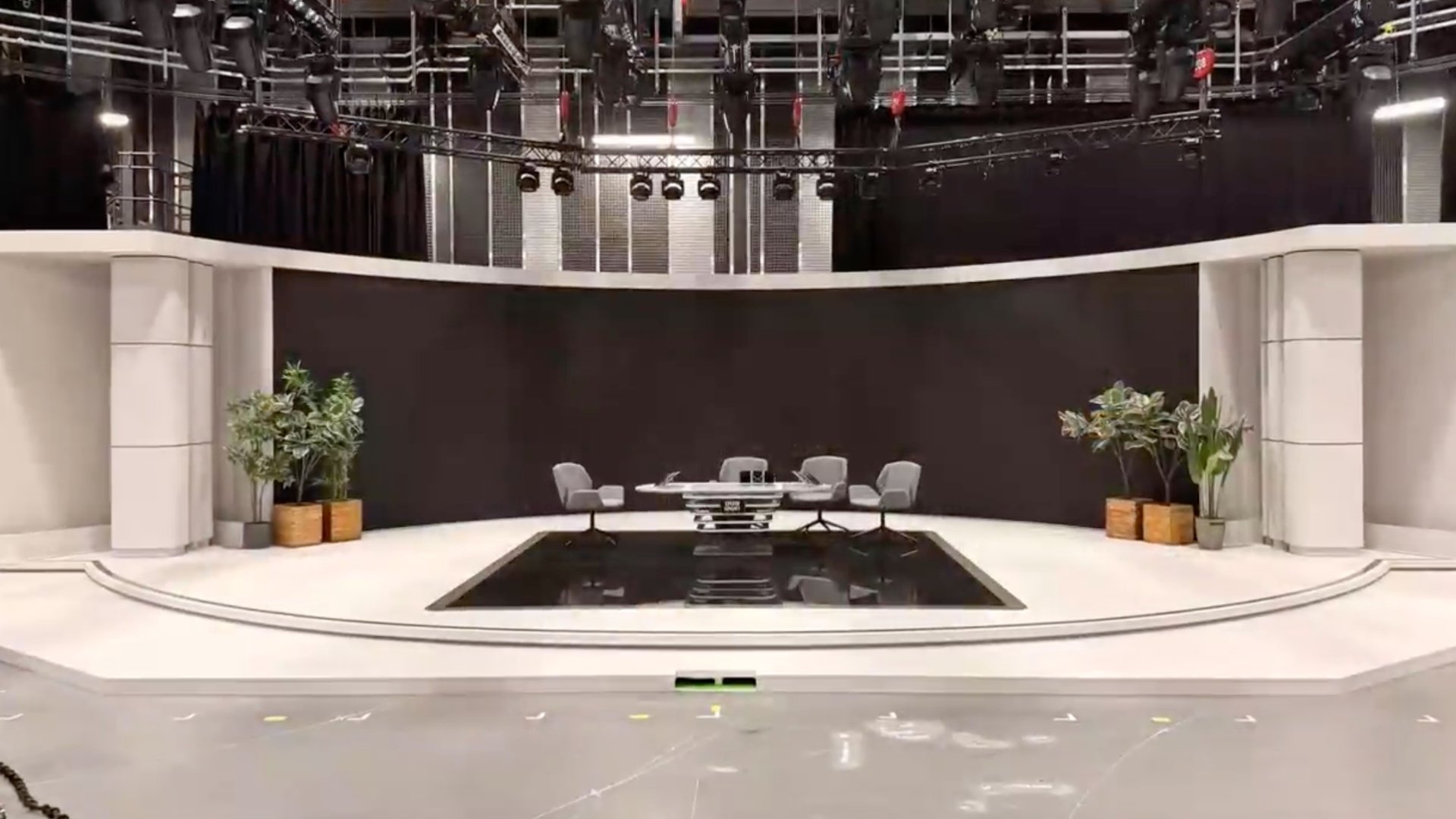
BBC Sport World Cup XR Studio - LED Wall & Floor with Phyical Set - Courtesy of BBC Sport
Around this core, dock10 provided the studio and remote-production facilities; AE Live delivered the virtual graphics, and a wider group of vendors completed the workflow. All working together to deliver a seamless XR space.
"Designing a “space and a feeling” not a postcard" - John Murphy
The original concept used pre-recorded video plates in the large window of the full virtual environment. In testing, the fixed perspective of the video didn’t match with the changing perspective of the virtual scene. So, the production shifted toward flexible, real-time rendered skylines built from processed still imagery and AI-enhanced assets,
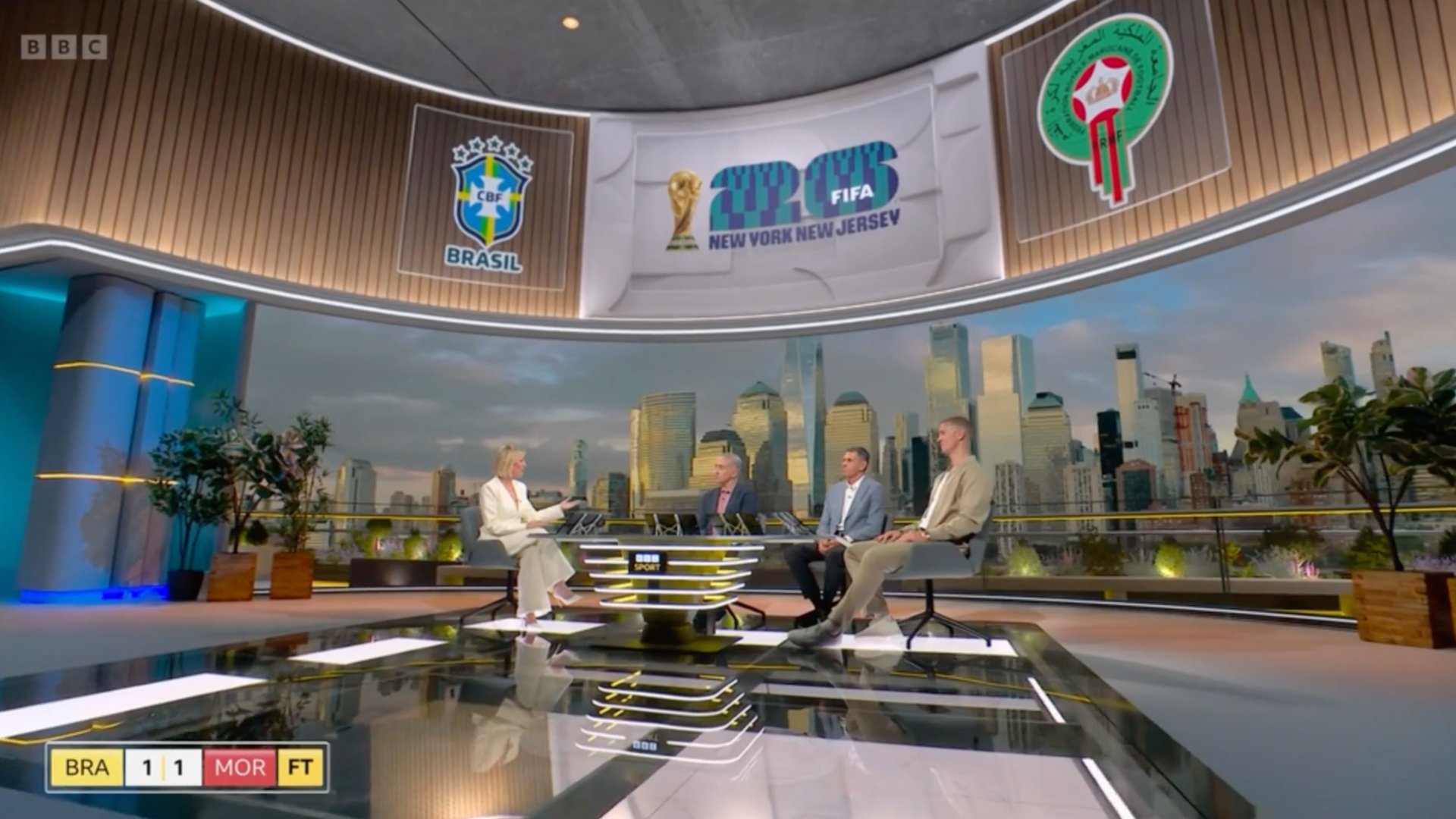
The BBC XR studio uses LED, Physical Set and 360 set extension graphics. Courtesy BBC Sport
The payoff is creative control. Because the skylines were now rendered in real time, the BBC could adjust the digital backdrop to reflect the weather and time of day at each venue, shifting the mood of the studio to match a sweltering afternoon in Dallas or a cool evening in Vancouver. The goal, in Murphy's words, was to capture “a space and a feeling” that carries the identity of all 16 host cities - something a fixed video plate could never do.
This is where a real-time engine earns its place: not as a video player, but as a living environment that responds to the camera, the schedule, and the story of the day.
Outcome:
The Honest Lesson: LED virtual production is
a different discipline
The BBC has been candid that full LED virtual production is not simply “green screen, but better.” Murphy admitted the team went in “a little naively,” and quickly learned that an LED volume introduces more technologies, partners, and interdependencies than a chroma set - from HDR color management to the synchronization between camera tracking, render engines, and LED processing.
That candor reflects the real value a mature real-time platform provides, not the elimination of complexity, but the orchestration of it. Pixotope's role in a build like this is to be the dependable real-time layer that ties tracking, environment, and augmented graphics together so a live gallery can trust the picture - shot after shot, match after match, across a 39-day tournament. This is where Pixotope and going virtual with confidence delivers.
An Investment Beyond One Tournament
Crucially, the BBC did not treat this as a one-off World Cup set. The LED infrastructure and virtual production workflows established for 2026 are intended to become a long-term foundation for the broadcaster's football output - feeding future studio coverage including programming in the Match of the Day strand.
That reframes the economics entirely. The virtual production stack isn't a tournament expense to be written off in July; it's a reusable, reconfigurable studio capability. A new environment is a software build, not a construction or technical project - which is precisely the proposition that makes real-time virtual production compelling for broadcasters facing both budget pressure and rising production ambition.
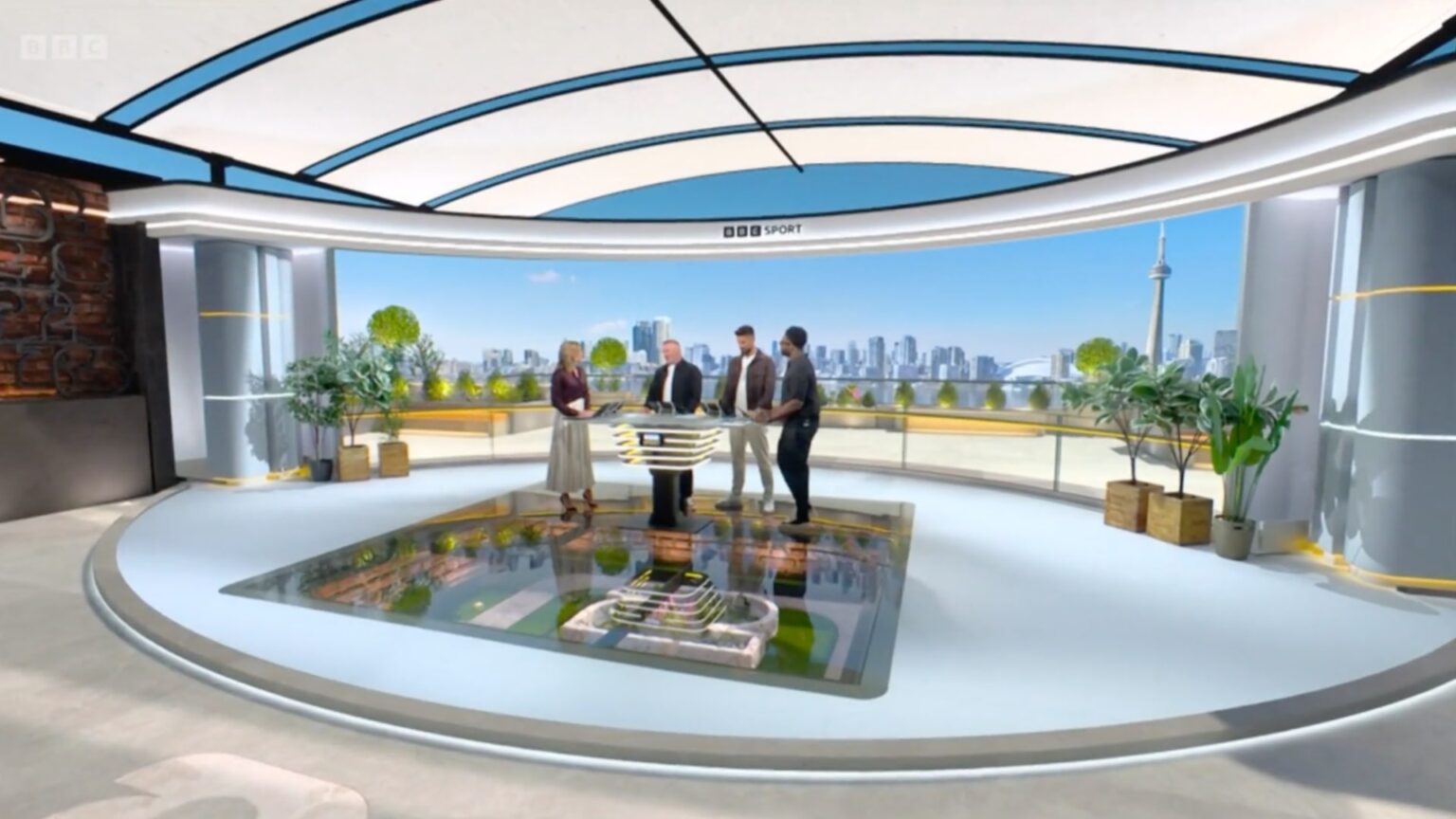
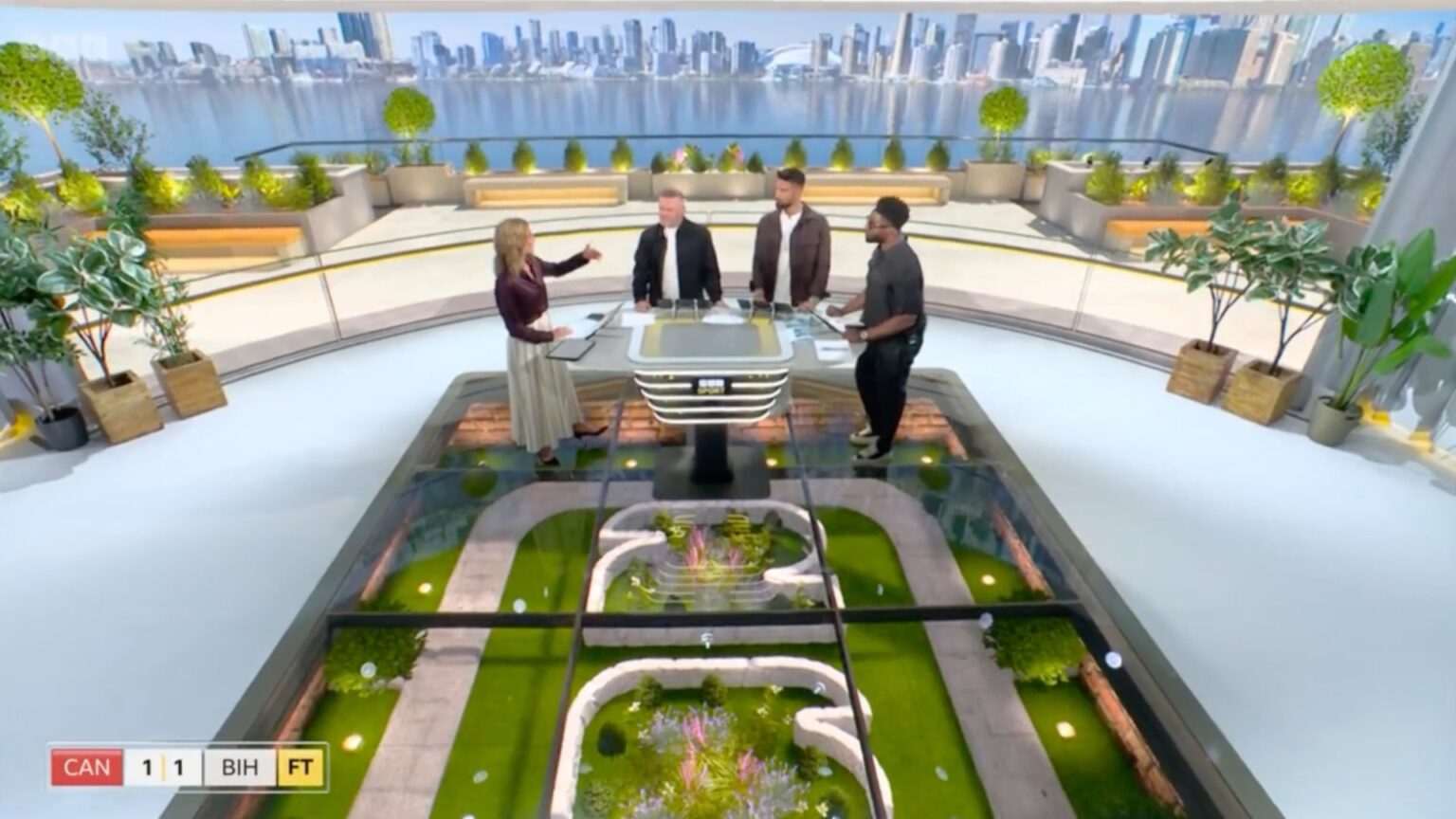
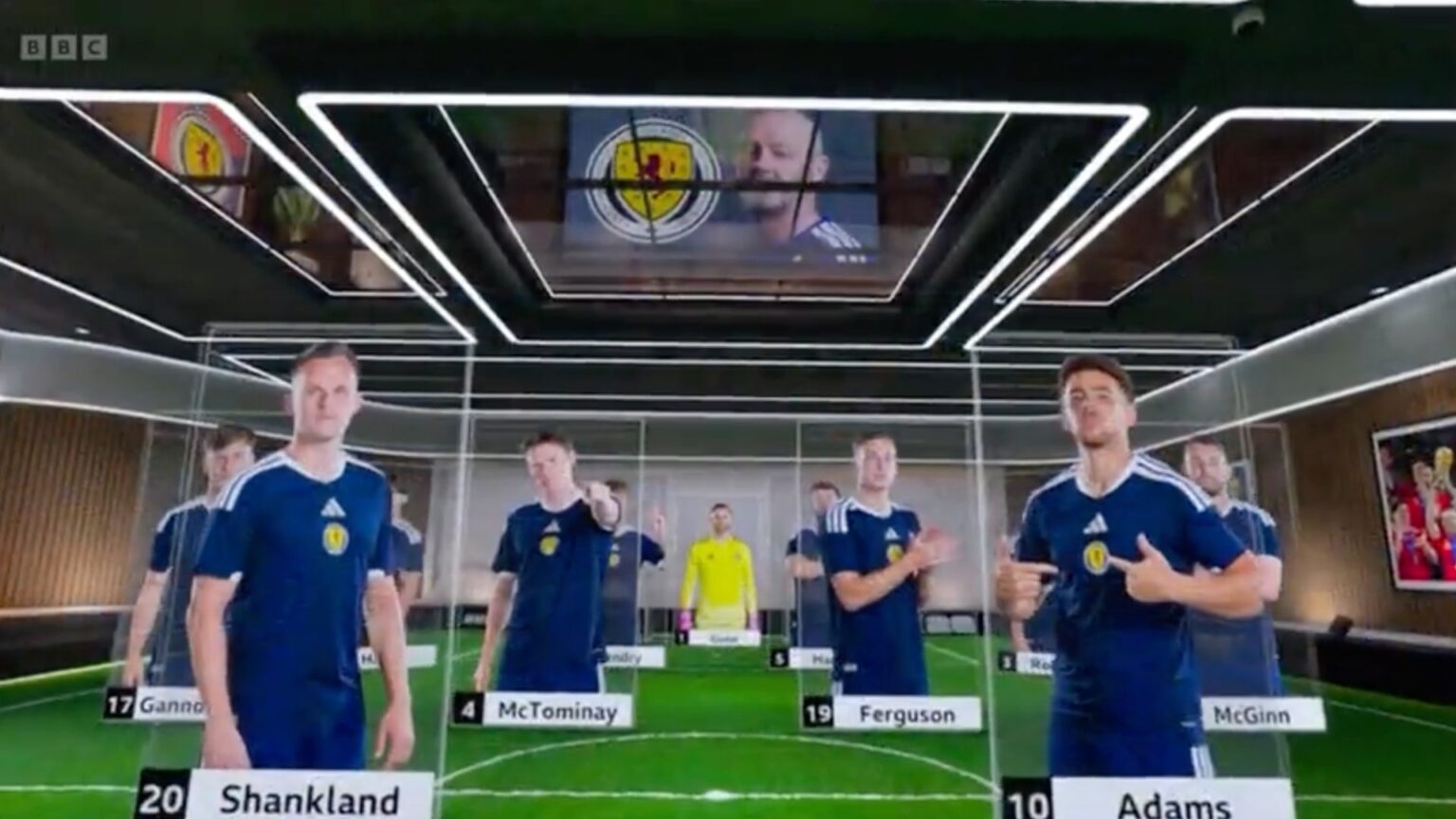
The LED floor gives production a space underneath the studio for graphics & editorial to feel embedded in the space. Courtesy of BBC Sport
IN THEIR WORDS:
“Given the scale of the tournament, along with the practical realities of travel and sustainability, virtual production makes far more operational sense. Moving to XR gives us blank canvas, so the creative challenge is how to create a space that still feels genuine and connected to the tournament. Pixotope gives us the technical and creative freedom to achieve that and allow for easy real-time changes.”
John Murphy, Design Director, BBC Sport
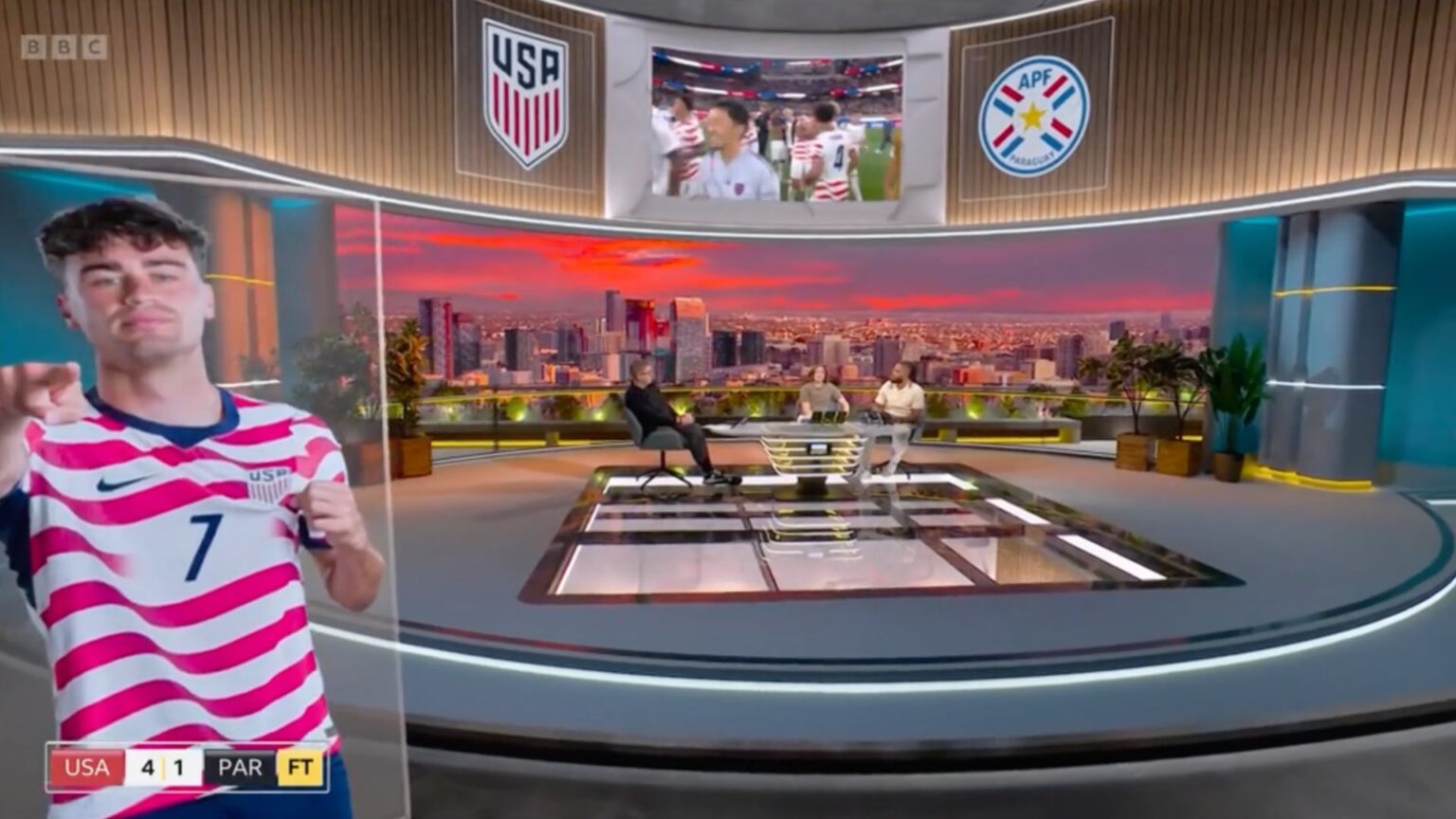
Powered by Pixotope — every camera also has real-time AR for full 360° set extension and editorial graphics. Courtesy of BBC Sport
Pixotope powers real-time virtual production for the world's biggest live studios and event broadcasts. The platform incorporates XR, AR and virtual sets as well as camera tracking, talent tracking, data integration and templated playlist control tools.
Talk to our team about building a studio capability that works for you and your content.