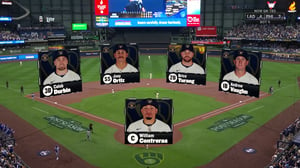
CAMERA TRACKING FOR
ANY PRODUCTION SCENARIO
UNIQUE
CAMERA TRACKING TECHNOLOGY
Pixotope is the only camera tracking system that covers every tracking method — markerless, marker-based, hybrid, and through-the-lens — in a single software product.
That means one team can handle any production, from a marked studio to a live stadium, without switching systems. It's used worldwide across broadcast, film, exhibitions, and sports events.
Free camera movement
Even for hand-held shots
Pixotope optical camera tracking systems accurately calculate the 3D position and orientation of the camera body itself.
This enables any kind of camera movement within the tracking area, also suitable for hand-held cameras.
The additional integration of pre-calibrated zoom lens data allows zoom and focus settings regardless of the camera movements.
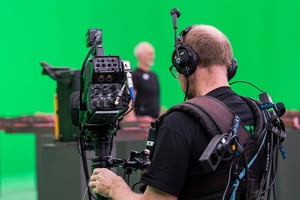
Works on
any support system
Pixotope optical camera tracking systems measure the position and orientation of the camera body itself and work independently of the camera support system which is currently being applied.
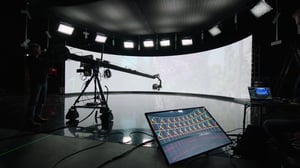
Now, you can simply choose between using a tripod, pedestal, dolly, jib arm, crane, Steadicam or even a hand-held camera.
There is no need to purchase an additional specialized support system, simply upgrade your existing one.
The innovative Pixotope camera tracking system is used worldwide across broadcast, film, exhibitions, and sports events.
Pixotope camera tracking system is unique in the market as the only system that covers all types of tracking methods.

Pixotope camera tracking offers precise 3D positioning, orientation and integrated zoom lens data for flexible camera movements.
Utilizes powerful commodity hardware and is specifically designed to connect with partner technologies.
FEATURES AND
SPECIFICATIONS
Pixotope camera tracking software is available in 4 different options.
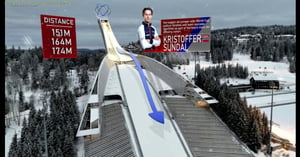
Versatile real-time tracking solution that covers all types of tracking methods
Book your camera tracking demo
FAQs
The 'Matchmove', or camera-tracking is a crucial task in the virtual production pipeline.
Virtual production relies heavily on real-time camera tracking, which synchronizes live-action footage with the virtual camera so that 3D data and live-action footage can be seamlessly integrated.
With their long history of use in live broadcast AR, mechanical tracking systems are still considered to be dependable and are the mainstay of many sports and live events, especially in larger arenas.
However, mechanical systems can require significant setup time and they require regular realignment. It is also necessary for the camera rig to have a fixed origin from which the movement of the mechanism can be referenced, limiting flexibility.
Optical camera tracking systems, on the other hand, can give far more freedom to move the camera around. Cameras with optical tracking can be moved freely; you can even use a steadicam.
As the tracking sensor typically points upwards or downward rather than into the set, it is unaffected by studio conditions such as lighting configurations, reflections, and plain green screens. Setup can also be relatively quick and easy.