

For fashion brands, timing is everything. Campaigns are often produced one or two seasons ahead, requiring teams to create visuals long before products reach consumers. For ZARA Kids’ Spring/Summer campaign, this presented a unique challenge: capturing the unmistakable look and feel of California streets in the middle of January without relocating the entire production across the world.
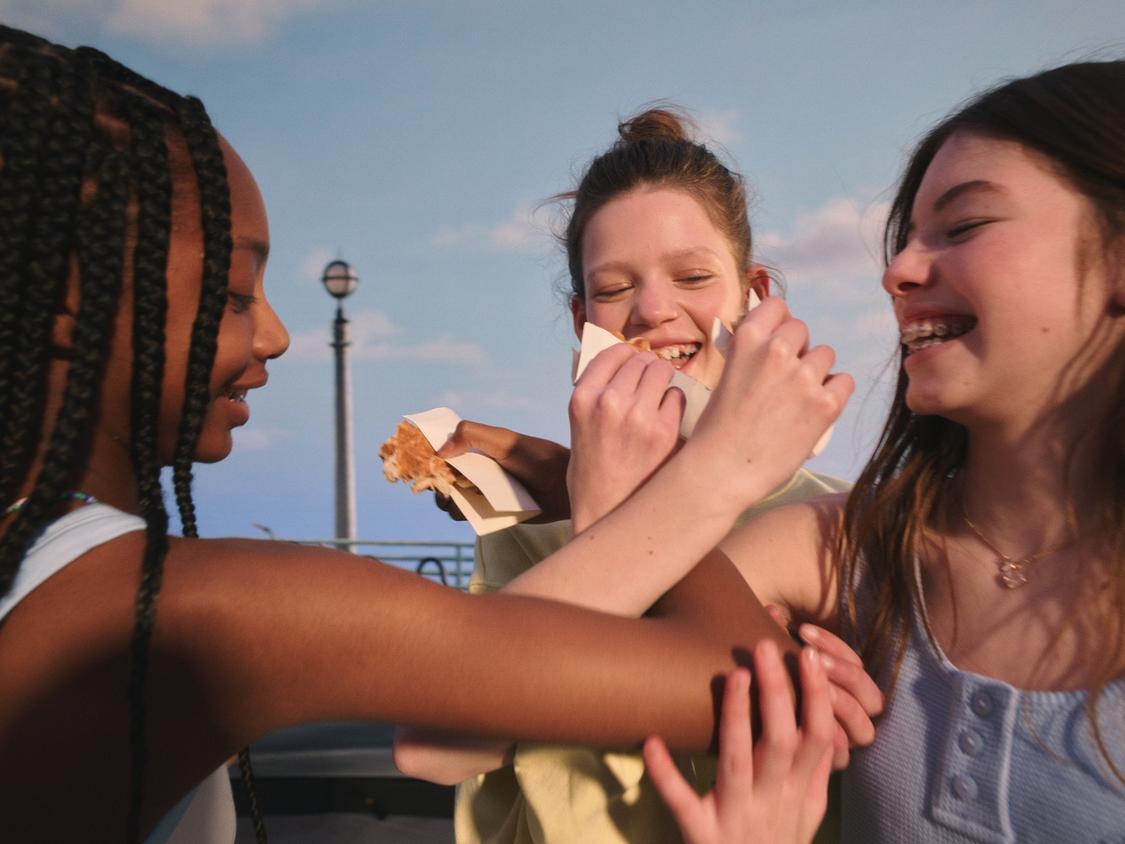
Instead of traveling to the United States, the production team turned to virtual production, powered by Gaussian splatting technology, to recreate highly realistic Californian environments closer to home. By combining real-world environment capture with a real-time LED wall pipeline, the team preserved the campaign’s creative vision while gaining greater flexibility, control, and efficiency.
The photoshoots took place at Coruña Estudio Inmersivo (CEI), the largest virtual production centre in Spain and one of the most innovative in Europe.
Located in A Coruña and managed by Pedralonga Estudios, it has a total area of 2,000 sqm equipped with state-of-the-art immersive technology capable of recreating hyper-realistic environments that drive both the national and international media industry.
The Challenge: Recreating California Without Leaving Europe
From the start, the visual identity of the campaign was deeply rooted in California’s suburban streets and sun-soaked urban environments. Those locations were essential to the storytelling. Traditionally, the production would have faced two options:
● Relocate cast, crew, and equipment internationally
● Rebuild environments manually using traditional 3D pipelines
Neither option was ideal.
Traditional photogrammetry and 3D modeling workflows had already been part of the team’s toolkit, but recreating entire real-world locations to a photorealistic standard was too slow for the pace of fashion production.
“Rebuilding a real-world environment to a convincing level using traditional 3D techniques required development times that simply were not practical for the pace of fashion production.”
Juan Mugarra
Gaussian splats changed that.
Why Gaussian Splats?
The production required a large number of environments in a compressed timeframe. Using Gaussian splatting allowed the team to:
● Capture environments quickly with photorealistic fidelity
● Reduce manual modeling requirements
● Increase environmental flexibility
● Shift creative decisions into pre-production
● Bring multiple global locations into a single controlled studio environment
For dense urban scenes especially, Gaussian splats proved far more efficient than traditional asset creation methods.
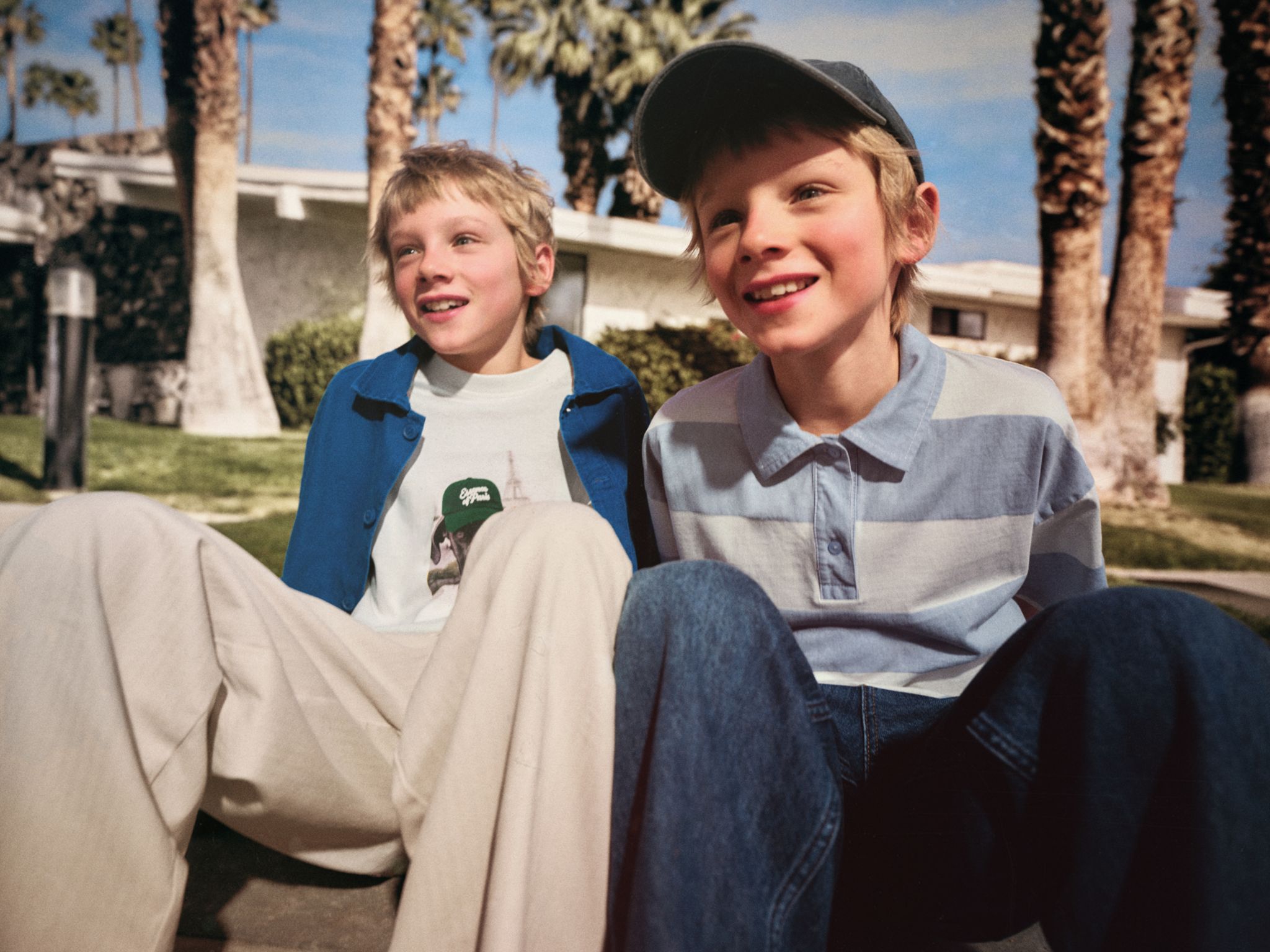
The Workflow: From Capture to Final Pixel
Unreal Engine, Volinga Suite, and Pixotope formed the backbone of the production pipeline. The team developed and refined a multi-modal capture workflow over the course of a year, combining:
● LiDAR scanning
● Drone capture
● Multiple camera systems
Locations were scanned globally, including Los Angeles, Palm Springs, New York City, South Korea, Japan and Spain.
For the ZARA Kids campaign specifically:
● 8 environments were captured
● 6 final environments were selected
● The campaign was shot across 5 production days
These environments were rendered in real-time with Pixotope using the Volinga plugin and integrated into an in-camera virtual production workflow on an LED wall, minimizing the need for post-production compositing.
Solving Technical Challenges in Production
As an emerging technology, Gaussian splats introduced new technical challenges. One of the biggest hurdles was environment cleanup, particularly removing floating artifacts and unwanted visual noise inside dense foliage. The team initially handled some scene modifications manually using Supersplat, including:
● Removing a stop sign
● Adding a pre-scanned fire hydrant directly into the scene
Since then, their workflow has evolved to include more efficient techniques like culling volumes.
Hardware was another key factor. Gaussian splats are highly demanding on GPU memory, and the team currently works with systems equipped with 24GB of VRAM, which sets practical limits on how many splats can be rendered simultaneously. Their average scene size ranged between 20–30 million points per environment.
Real-Time Flexibility on Set
One of virtual production’s biggest advantages is the ability to make creative decisions in real time. During production, the team could use the real-time tools available in Pixotope to adjust:
● Time of day
● Cloud coverage
● Lighting conditions
● Environmental props
"Gaussian splats provide a new, faster way to generate photo-realistic content for 3D scenes from images. Splats are generally most valuable for static environments, but the technology is rapidly evolving."
Øystein Larsen, Chief Creative Officer, Pixotope
While loading full environments still took several minutes due to dataset size, once loaded, the creative team could iterate quickly and make decisions on the spot. This allowed directors and creatives to approach each scene with greater confidence and precision.
“The biggest advantages for the creative team were flexibility and the ability to pre-plan environments with a very high degree of precision.”
Juan Mugarra, Virtual Production Supervisor
Shifting the Timeline: More Work Upfront, More Control Later
Rather than reducing overall production time, virtual production redistributed it. More effort moved into pre-production:
● Environment capture
● Cleanup
● Scene prep
● Technical validation
But that shift delivered major advantages:
● Better alignment across departments
● More predictable shoot days
● Fewer on-set surprises
● Faster execution once cameras rolled
For the production team, this was seen as a major benefit.
Reducing Travel, Increasing Sustainability
One of the most significant impacts was logistical. By using virtual production, the team was able to combine European talent with American locations without moving production operations across continents. This reduced:
● International travel
● Equipment shipping
● Location logistics
● Environmental footprint
The Results
With Gaussian splats, Volinga, and Pixotope, ZARA Kids successfully brought multiple Californian environments into a single production pipeline, delivering:
● High-fidelity, realistic urban environments
● Six final production-ready locations
● Faster environmental iteration on set
● Greater creative control over weather and lighting
● Reduced dependency on post-production
● Improved production predictability
● Reduced international travel
Most importantly, the workflow unlocked creative possibilities that would have been extremely difficult, or impossible, to achieve through traditional location shooting.
"Volinga provides best-in-class splat generation and editing tools, fully supporting relighting, splat mixing, and ACES support for HDR color, well integrated in Pixotope Editor. The HDR alone provides a much higher level of photorealism in the splats, resulting in realistic exposure, depth of field, and bloom effects"
Øystein Larsen, Chief Creative Officer, Pixotope
Looking Ahead: The Future of Virtual Production
For the team, Gaussian splats represent more than a new tool. They represent a fundamental shift in how location-based production can work.
“The ability to capture real-world environments quickly and reproduce them with a high degree of realism fundamentally changes how productions can approach location work.”
Juan Mugarra, Virtual Production Supervisor
As hardware and software continue to evolve, the team sees enormous potential for Gaussian splats to become a standard component of virtual production pipelines, not just in fashion, but across broadcasting, XR, film, and live production.
Credits
Director & Photographer: Carlos Álvarez
Virtual Production Supervisor: Juan Mugarra
ZARA Kids Production Team: Isabel Fernández Armesto and Beatriz De Cossio Domínguez
Production: Noba
Physical Set Designer: María Ona
Infrastructure: Pedralonga Estudios